

Struggling to figure out how to floss with braces in Greenville, SC? Thread waxed floss through your braces using a floss threader. Curve it around each tooth and move gently up and down. Clean below the gumline, but stay gentle.
Read the complete cleaning steps in the full article.
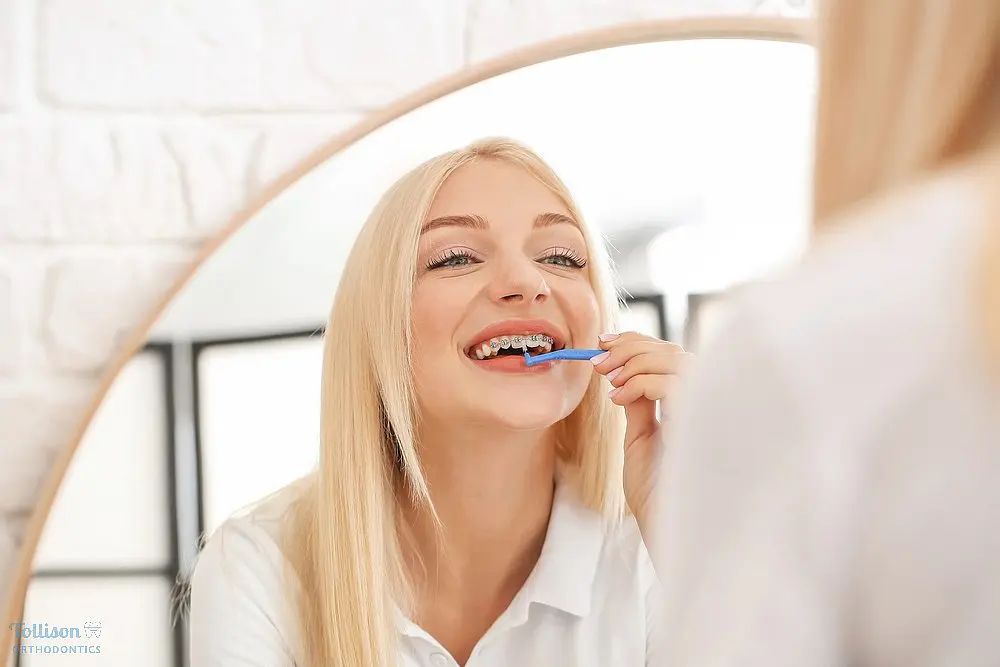
Why Flossing Matters with Braces
Braces help straighten your teeth. But they can make cleaning harder. Food particles and plaque often get stuck around wires and brackets. If ignored, this buildup turns into tartar and causes tooth decay, gum disease, and other problems. Flossing removes the debris that brushing alone can’t. Keeping your mouth clean helps your braces work more efficiently.
Best Tools for Flossing with Braces
Using the right tools makes flossing much easier. Here are some helpful ones:
Floss Threaders
A floss threader acts like a needle to guide dental floss under your wires. This makes it simple to clean between teeth without damaging your braces. Many orthodontists, like Tollison Orthodontics, offer these tools to their patients.
Water Flossers
A water flosser sprays water to clean tight spots around wires and brackets. It’s perfect for people with sensitive gums or difficulty using string floss. A water flosser makes flossing faster and less of a hassle. According to Dr. Jeffrey Lenius, a professional orthodontist in Overland Park, KS, water flossers are a game-changer for patients with sensitive gums or those who struggle with traditional string floss.
Superfloss
Superfloss contains stiff and spongy sections. These parts help clean under wires and around brackets. It works well for reaching tricky areas. You can use it to remove food or plaque that regular floss might miss. It’s soft on your gums and easy to guide between teeth.
Interdental Brushes
An interdental brush (or proxy brush) is a tiny brush that slides between your teeth. It’s especially useful for removing plaque from hard-to-reach areas. These brushes come in different sizes to fit your needs.
Floss Picks
Floss picks include a handle and a strand of dental floss. They’re great for cleaning between teeth, especially when traditional flossing feels tricky. Floss picks are easy to hold and perfect for use on the go. Many people prefer them for their quick and simple cleaning routine.
Where to Get These Tools
Find floss threaders, water flossers, interdental brushes, and superfloss at drugstores, online retailers, or orthodontic clinics. Tollison Orthodontics in Greenville, SC, provides starter kits to make your hygiene routine easier.
How to Floss with Braces: Step-by-Step Guide
Follow these steps for proper flossing:
Step 1: Prep Your Floss
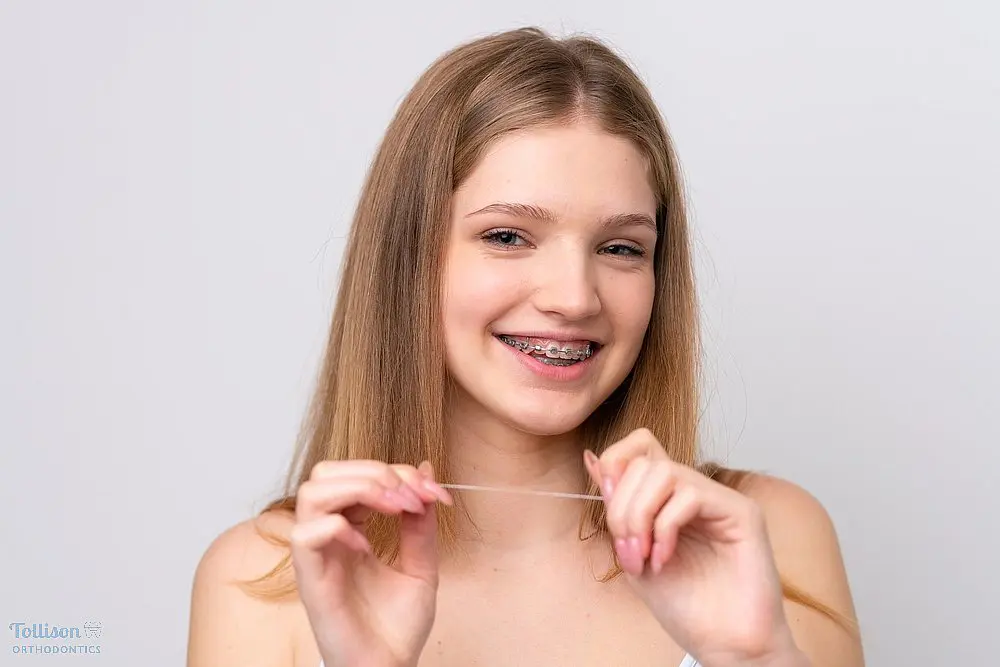
Take about 18 inches of floss. Thread it under the wire using a floss threader. Hold the ends tight so the floss doesn’t slip while you clean. Move slowly and carefully to avoid pulling on the wire or hurting your gums.
Step 2: Floss Each Tooth
Wrap the floss around a single tooth in a “C” shape. Gently slide it up and down along the gumline to remove plaque and food particles. Be careful not to snap it or pull too hard to avoid causing discomfort or damaging your braces.
Step 3: Use a Water Flosser for Hard-to-Reach Areas
For extra cleaning, aim a water flosser at tricky areas like the back teeth and brackets. Adjust the pressure for sensitivity if needed. Move the water stream slowly along your gumline to wash away food and plaque. This helps keep your mouth fresh and reduces the risk of cavities or gum problems.
Step 4: Finish with Brushing
After flossing, brush your teeth with a soft-bristle toothbrush and fluoride toothpaste. Pay extra attention to the areas around wires and brackets. Rinse with fluoride mouthwash for additional protection against tooth decay.
Flossing Based on Braces Type
Different braces need specific flossing methods:
- Metal Braces: Use more time threading dental floss.
- Clear Braces: Be gentle to avoid damaging delicate brackets.
- Lingual Braces: Use tools like a proxy brush or a water flosser.
- Self-Ligating Braces: While they have fewer parts, your hygiene routine should stay thorough.
Common Challenges and Quick Fixes
Sensitive Gums
If flossing irritates your gums, rinse with warm saltwater afterward. Floss gently, and over time, your gums will adjust and become healthier. Be patient as your mouth gets used to the new routine.
Hard-to-Reach Spots
Use tools like interdental flossers, proxy brushes, or a water flosser to clean stubborn areas. These tools help reach spots that regular floss might miss. Taking a few extra minutes to use them keeps your teeth cleaner and prevents plaque buildup.
Frustration with String Floss
If threading regular dental floss feels frustrating, try pre-threaded floss picks. These make it easier and quicker to floss around braces. They’re also great for on-the-go use, so you can keep your teeth clean even when you’re busy or away from home.
Oral Care After Braces
When your braces come off, maintaining good oral hygiene habits is still important. Here’s how to keep your smile healthy:
- Clean Your Retainer: Wash your retainer daily to prevent plaque buildup.
- Floss Often: Daily flossing keeps your gums and teeth clean.
- Brush Regularly: Brush for two minutes, twice a day, with fluoride toothpaste.
Professional Help from Tollison Orthodontics
Tollison Orthodontics aims to make your orthodontic care simple and stress-free. Our expert team offers:
- Flossing Tips: We teach you easy techniques during visits.
- Starter Kits: Get a complete cleaning tool set with items like floss threaders.
- Guidance: We help with sensitivity, tooth decay prevention, and improving oral hygiene methods.
Take the Stress Out of Flossing with Braces Now
Don’t let braces make flossing harder than it needs to be. Flossing with braces doesn’t have to be overwhelming. With the right tools and guidance, you can keep your teeth and gums healthy throughout treatment. Schedule your appointment with Tollison Orthodontics today and get the support you need for a cleaner, healthier smile during and after treatment.
About The Authors
Dr. Blake Tollison – Orthodontist in Greenville, SC
Dr. Jeffrey Lenius – Orthodontist in Overland Park, KS
Frequently Asked Questions
How long can I go without flossing with braces?
It might seem easier to skip flossing when you have braces, but it’s best not to. Brackets and wires trap food and plaque very quickly, which can lead to cavities, stains, or gum issues. You really shouldn’t go more than a day without flossing. If you find it difficult, tools like floss threaders or interdental brushes can make the job faster and less frustrating. Daily flossing keeps your teeth and gums healthy, so your braces can do their work without setbacks.
Does flossing speed up braces?
Flossing won’t make your teeth move faster, but it’s still very important. Clean teeth and gums help prevent problems like cavities or gum disease, which can slow down treatment. By flossing daily, you keep your braces on track and your smile healthy.
Is it normal to not be able to floss with braces?
Yes, it’s very common to have trouble flossing when you first get braces. The wires and brackets make it harder to reach between your teeth. Many people struggle at first, but there are tools to help, like floss threaders, dental picks, or interdental brushes. With practice, flossing around braces gets easier.